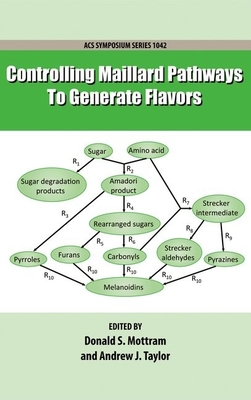
The role of the Maillard reaction in forming flavors from amino acid and sugar precursors has been studied for many years. To establish the basic chemistry of the reaction, researchers have used model systems, often solutions of a single amino acid with a single sugar. Despite the apparent simplicity of the system, heating such a solution can generate tens if not hundreds of compounds, which requires careful and time-consuming analysis to identify and quantify each component. Data from the model systems has allowed ...
Read More
The role of the Maillard reaction in forming flavors from amino acid and sugar precursors has been studied for many years. To establish the basic chemistry of the reaction, researchers have used model systems, often solutions of a single amino acid with a single sugar. Despite the apparent simplicity of the system, heating such a solution can generate tens if not hundreds of compounds, which requires careful and time-consuming analysis to identify and quantify each component. Data from the model systems has allowed researchers to study the pathways that lead to flavor formation, and various schemes have been proposed to identify the main "routes" that lead to flavor compounds. Such schemes have led to one of the main control principles, namely an understanding of the role of amino acids in forming some characteristic aromas, e.g., bread flavor from proline, as well as an appreciation of the role of C5 and C6 sugars in controlling the rate of reaction. Recently, the formation of taste compounds through the Maillard reaction has been investigated and new potent compounds have been discovered that can contribute to the overall flavor formed during the Maillard reaction. These findings also offer the potential for control and manipulation of the Maillard reaction to form specific types of flavor. Although the nature of the end-products of the Maillard reaction in both food and model systems are well documented, applying these principles to control flavor formation in real foods has proved difficult. This book describes recent research and developments related to the control of the Maillard reaction to give optimum flavor quality. These include kinetic modeling of the reaction, the effect of physical parameters (temperature, time, moisture content, pH), and the effect of chemical parameters (amino acid and sugar composition, the presence of other components). The topics covered relate to real food systems and reaction product flavorings, as well as model systems. Contributors from academia and industry have come together to provide an up to date overview of progress in this important area of flavor research.
Read Less
Add this copy of Controlling Maillard Pathways to Generate Flavors (Acs to cart. $188.99, good condition, Sold by Goodwill rated 5.0 out of 5 stars, ships from Brooklyn Park, MN, UNITED STATES, published 2011 by American Chemical Society.
Choose your shipping method in Checkout. Costs may vary based on destination.
Seller's Description:
Good. All pages and cover are intact including the dust cover if applicable. Spine may show signs of wear. Pages may include limited notes and highlighting. May include From the library of labels. Shrink wrap dust covers or boxed set case may be missing. Item may be missing bundled media.
Add this copy of Controlling Maillard Pathways to Generate Flavors (Acs to cart. $190.00, like new condition, Sold by JIMS BOOKS rated 2.0 out of 5 stars, ships from West Des Moines, IA, UNITED STATES, published 2011 by American Chemical Society.