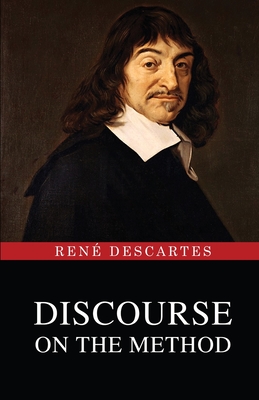
The extracts below are from Descartes' Discours de la Methode first published in 1637. I had always a most earnest desire to know how to distinguish the true from the false, in order that I might be able clearly to discriminate the right path in life, and proceed in it with confidence. ... In considering the manners of men I found hardly any ground for settled conviction and saw hardly less contradiction among them than in the opinions of the philosophers. So ... I learned not to entertain too decided a belief, in regard to ...
Read More
The extracts below are from Descartes' Discours de la Methode first published in 1637. I had always a most earnest desire to know how to distinguish the true from the false, in order that I might be able clearly to discriminate the right path in life, and proceed in it with confidence. ... In considering the manners of men I found hardly any ground for settled conviction and saw hardly less contradiction among them than in the opinions of the philosophers. So ... I learned not to entertain too decided a belief, in regard to anything of the truth of which I had been persuaded merely by example and custom, and thus I gradually extricated myself from many errors powerful enough to darken our natural intelligence, and incapacitate us in great measure from listening to reason. ... I at length resolved to make myself an object of study, and to employ all the powers of my mind in choosing the paths I ought to follow. ... I was in Germany, attracted thither by the wars, and as ... the setting in of winter arrested me in a locality where I found no society to interest me, and was besides fortunately undisturbed by any cares or passions, I remained the whole day shut up in a warm room where I had leisure to occupy my attention with my own thoughts. ... As for the opinions which up to that time I had embraced, I thought that I could not do better than resolve at once to sweep them wholly away, that I might afterwards be in a position to admit either others more correct, or even perhaps the same when they had undergone the scrutiny of reason. I firmly believed that in this way I should much better succeed in the conduct of my life, than if I built only upon old foundations, and leant upon principles which, in my youth, I had taken upon trust. The long chains of simple and easy reasonings by means of which geometers are accustomed to reach the conclusions of their most difficult demonstrations led me to imagine that all things, to the knowledge of which man is competent, are mutually connected in the same way, and that there is nothing so far removed from us as to be beyond our reach, or so hidden that we cannot discover it, provided only we abstain from accepting the false for the true, and always preserve in our thoughts the order necessary for the deduction of one truth from another. ... Considering that of all those who have sought truth in the sciences, the mathematicians alone have been able to find any demonstrations, that is, any certain and evident reasons, I did not doubt but that such must have been the rule of their investigations. I resolved to commence, therefore, with the examination of the simplest objects and believed that the four following (precepts) would prove perfectly sufficient for me, provided I took the firm and unwavering resolution never in a single instance to fail in observing them. The first was, never to accept anything for true which I did not clearly know to be such. The second, to divide each of the difficulties under examination into as many parts as possible and as might be necessary for its adequate solution. The third, to conduct my thoughts in such order that, by commencing with objects the simplest and easiest to know, I might ascend by little and little, and as it were, step by step, to the knowledge of the more complex. And the last, in every case to make enumerations so complete and reviews so general that I might be assured that nothing was omitted. The chief ground of my satisfaction with this method, was the assurance I had of thereby exercising my reason in all matters, if not with absolute perfection, at least with the greatest attainable by me.
Read Less
Add this copy of A Discourse on the Method to cart. $3.26, very good condition, Sold by ThriftBooks-Reno rated 4.0 out of 5 stars, ships from Reno, NV, UNITED STATES, published 2008 by Oxford University Press.
Add this copy of A Discourse on the Method to cart. $3.26, very good condition, Sold by ThriftBooks-Dallas rated 4.0 out of 5 stars, ships from Dallas, TX, UNITED STATES, published 2008 by Oxford University Press.
Add this copy of A Discourse on the Method to cart. $3.26, good condition, Sold by ThriftBooks-Atlanta rated 4.0 out of 5 stars, ships from Austell, GA, UNITED STATES, published 2008 by Oxford University Press.
Add this copy of A Discourse on the Method to cart. $3.26, good condition, Sold by ThriftBooks-Baltimore rated 4.0 out of 5 stars, ships from Halethorpe, MD, UNITED STATES, published 2008 by Oxford University Press.
Add this copy of A Discourse on the Method to cart. $3.29, good condition, Sold by ThriftBooks-Atlanta rated 4.0 out of 5 stars, ships from Austell, GA, UNITED STATES, published 2008 by Oxford University Press.
Add this copy of A Discourse on the Method to cart. $3.29, good condition, Sold by ThriftBooks-Baltimore rated 4.0 out of 5 stars, ships from Halethorpe, MD, UNITED STATES, published 2008 by Oxford University Press.
Add this copy of A Discourse on the Method (Oxford World's Classics) to cart. $3.59, very good condition, Sold by HPB-Ruby rated 4.0 out of 5 stars, ships from Dallas, TX, UNITED STATES, published 2008 by Oxford University Press.
Choose your shipping method in Checkout. Costs may vary based on destination.
Seller's Description:
Very good. Connecting readers with great books since 1972! Used books may not include companion materials, and may have some shelf wear or limited writing. We ship orders daily and Customer Service is our top priority!
Add this copy of A Discourse on the Method (Oxford World's Classics) to cart. $4.00, very good condition, Sold by HPB-Diamond rated 4.0 out of 5 stars, ships from Dallas, TX, UNITED STATES, published 2006 by Oxford University Press.
Choose your shipping method in Checkout. Costs may vary based on destination.
Seller's Description:
Very good. Connecting readers with great books since 1972! Used books may not include companion materials, and may have some shelf wear or limited writing. We ship orders daily and Customer Service is our top priority!