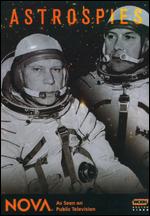
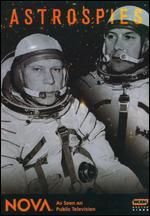
It represents a dark and all but unsung side of U.S. history: though millions are familiar with the 1950s "Space Race" that pitted the United States and the Soviet Union against one another in the contest to put a man on the moon, less publicized were the countries' attempts to spy on one another by launching military- trained astronauts (known as "astrospies") into orbit. The United States built and launched a covert satellite known as MOL (for Manned Orbiting Laboratory), designed for advanced espionage and piloted by the ... Read More
It represents a dark and all but unsung side of U.S. history: though millions are familiar with the 1950s "Space Race" that pitted the United States and the Soviet Union against one another in the contest to put a man on the moon, less publicized were the countries' attempts to spy on one another by launching military- trained astronauts (known as "astrospies") into orbit. The United States built and launched a covert satellite known as MOL (for Manned Orbiting Laboratory), designed for advanced espionage and piloted by the astrospies; it incorporated a super-powered telescope capable of viewing and identifying an object as small as three inches. The Soviets, in turn, devised a station called Almaz, with like capabilities - but theirs traveled a "step beyond," by including a cannon designed to attack occupants of MOL. For decades, this history retained a 'covert' status and went largely unacknowledged among the general public; the PBS documentary NOVA: Astrospies represents the first attempt to tell the full story of these events. It features extended interviews with the participants of the original missions, a "mock-up" of MOL, a detailed exploration and discussion of the men's training, and much more. Nathan Southern, Rovi Read Less
Add this copy of NOVA: Astrospies to cart. $5.11, good condition, Sold by Warner Books rated 5.0 out of 5 stars, ships from Girard, OH, UNITED STATES, published 2008 by WGBH Boston.
Choose your shipping method in Checkout. Costs may vary based on destination.
Seller's Description:
Jay O. Sanders. Good in good packaging. Language: English. Run time: 56 mins. Originally released: 2007. Ex library copy. (W2) Moderate wear on DVD/CASE. Typical library, stampings, markings, stickers etc
Add this copy of Astrospies to cart. $11.97, good condition, Sold by GoPeachy rated 5.0 out of 5 stars, ships from JACKSONVILLE, FL, UNITED STATES, published 2008 by PBS.
Choose your shipping method in Checkout. Costs may vary based on destination.
Seller's Description:
Good. 2008 Run time: 56. Ships within 1 business day from FL, USA with Tracking. Used discs may not include digital content. All products 100% guaranteed.