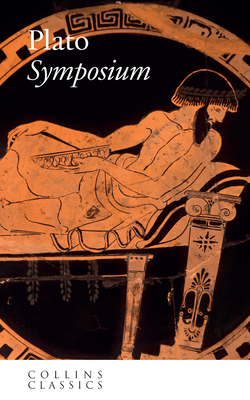
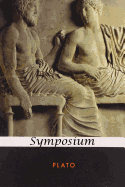
It has been said that, after the Bible, Plato's dialogues are the most influential books in Western culture. And of the dialogues, the Symposium is the most delightful and accessible, requiring no special knowledge of ancient Greek philosophy or customs. Dramatizing a party in fifth-century B.C. Athens, the deceptively unassuming Symposium introduces--in the guise of convivial after-dinner conversation--profound ideas about the nature of love. In Phaedrus, here published together with the Symposium, Plato discusses the ...
Read More
It has been said that, after the Bible, Plato's dialogues are the most influential books in Western culture. And of the dialogues, the Symposium is the most delightful and accessible, requiring no special knowledge of ancient Greek philosophy or customs. Dramatizing a party in fifth-century B.C. Athens, the deceptively unassuming Symposium introduces--in the guise of convivial after-dinner conversation--profound ideas about the nature of love. In Phaedrus, here published together with the Symposium, Plato discusses the place of eloquence in expounding truth. In both dialogues, Socrates plays the leading role, by turns teasing, arguing, analyzing, joking, inspiring, and cajoling his followers into understanding ideas that have remained central to Western thought through the centuries.
Read Less
The writings of Plato can be quite an inspiration to anyone's life. While other ordinary books suggest a hazy picture of a philosophy, Plato delineates a detailed image of the simpleste things we view and feel in life.
Selina
Oct 1, 2007
Wonderful
This is one of the few books I read in Greak Civ that I really liked. The language can be a bit rough to understand in parts, but this is truly on interesting book. This is more a book to read and debate with friends. Plato brings up many points that are important even in today's world. This is not a quick read, but it is well worth the time to read Plato's brilliant work.