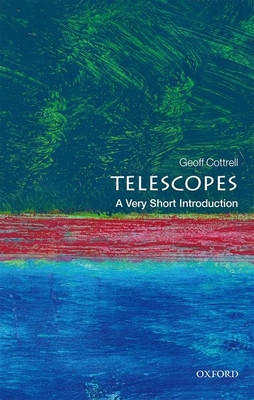
From the first, telescopes have made dramatic revelations about the Universe and our place in it. Galileo's observations of the Moon's cratered surface and discovery of Jupiter's four big satellites profoundly altered the perception of the heavens, overturning a two-thousand year cosmology that held the Earth to be the centre of the Universe. Over the past century, the rapid development of computer technology and sophisticated materials allowed enormous strides in the construction of telescopes. Modern telescopes range from ... Read More
From the first, telescopes have made dramatic revelations about the Universe and our place in it. Galileo's observations of the Moon's cratered surface and discovery of Jupiter's four big satellites profoundly altered the perception of the heavens, overturning a two-thousand year cosmology that held the Earth to be the centre of the Universe. Over the past century, the rapid development of computer technology and sophisticated materials allowed enormous strides in the construction of telescopes. Modern telescopes range from large Earth-based optical telescopes and radio arrays linking up across continents, to space-based telescopes capturing the Universe in infrared, ultraviolet, X-rays, and gamma rays. In combination, they have enabled us to look deep into the Universe and far back in time, capturing phenomena from galactic collisions to the formation of stars and planetary systems, and mapping the faint glow remaining from the Big Bang. In this Very Short Introduction, Dr. Geoff Cottrell describes the basic physics of telescopes, the challenges of overcoming turbulence and distortion from the Earth's atmosphere, and the special techniques used to capture X-rays and gamma rays in space telescopes. He explains the crucial developments in detectors and spectrographs that have enabled the high resolution achieved by modern telescopes, and the hopes for the new generation of telescopes currently being built across the world. ABOUT THE SERIES: The Very Short Introductions series from Oxford University Press contains hundreds of titles in almost every subject area. These pocket-sized books are the perfect way to get ahead in a new subject quickly. Our expert authors combine facts, analysis, perspective, new ideas, and enthusiasm to make interesting and challenging topics highly readable. Read Less
Add this copy of Telescopes: a Very Short Introduction to cart. $19.93, good condition, Sold by Greenworld Books rated 4.0 out of 5 stars, ships from Arlington, TX, UNITED STATES, published 2017 by Oxford University Press.
Choose your shipping method in Checkout. Costs may vary based on destination.
Seller's Description:
Good condition. It may show normal signs of use such as light writing highlighting or library markings but all pages are intact and the book is fully readable. A solid complete copy that's ready to enjoy.
Add this copy of Telescopes: a Very Short Introduction to cart. $72.71, good condition, Sold by Bonita rated 4.0 out of 5 stars, ships from Santa Clarita, CA, UNITED STATES, published 2017 by Oxford University Press.
Add this copy of Telescopes: a Very Short Introduction to cart. $110.77, new condition, Sold by Just one more Chapter rated 4.0 out of 5 stars, ships from Miramar, FL, UNITED STATES, published 2017 by Oxford University Press.
Add this copy of Telescopes: a Very Short Introduction to cart. $30.99, good condition, Sold by FirstClassBooks rated 4.0 out of 5 stars, ships from Little Rock, AR, UNITED STATES, published 2016 by Oxford University Press.