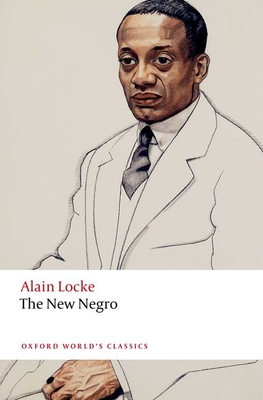
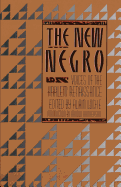
'We have to-morrow Bright before us Like a flame' The New Negro: An Interpretation is a multidisciplinary anthology of poetry, fiction, essays, criticism, art, and philosophy woven together into a seamless statement of Black agency in the arts and humanities that became, upon its publication in 1925, an instant publishing success. Edited by Alain Locke, a man known as the father of the Harlem Renaissance, the text is a powerful, provocative, and affecting anthology of writers who shaped the Harlem Renaissance movement and ... Read More
'We have to-morrow Bright before us Like a flame' The New Negro: An Interpretation is a multidisciplinary anthology of poetry, fiction, essays, criticism, art, and philosophy woven together into a seamless statement of Black agency in the arts and humanities that became, upon its publication in 1925, an instant publishing success. Edited by Alain Locke, a man known as the father of the Harlem Renaissance, the text is a powerful, provocative, and affecting anthology of writers who shaped the Harlem Renaissance movement and who help us to consider the evolution of the African American in society. With works by Black voices such as Zora Neale Hurston, Countee Cullen, and W. E. B. DuBois, Locke constructed a vivid look at the changing African American, finding their place in the ever shifting sociocultural landscape that was 1920s America. With an introduction from Jeffrey C. Stewart, leading biographer of Locke, this collection explores the literary strength as well as the historical context of a monumental and fascinating time in the history of America. Read Less
Add this copy of The New Negro (Oxford World's Classics) to cart. $29.68, good condition, Sold by Bonita rated 4.0 out of 5 stars, ships from Santa Clarita, CA, UNITED STATES, published 2026 by Oxford University Press.
Add this copy of The New Negro (Oxford World's Classics) to cart. $52.96, new condition, Sold by Bonita rated 4.0 out of 5 stars, ships from Santa Clarita, CA, UNITED STATES, published 2026 by Oxford University Press.
Add this copy of The New Negro to cart. $8.48, new condition, Sold by Ingram Customer Returns Center rated 5.0 out of 5 stars, ships from NV, USA, published 2025 by Oxford University Press.
Add this copy of The New Negro to cart. $13.28, new condition, Sold by GreatBookPrices rated 4.0 out of 5 stars, ships from Columbia, MD, UNITED STATES, published 2025 by Oxford University Press.
Choose your shipping method in Checkout. Costs may vary based on destination.
Seller's Description:
New. Oxford World's Classics . In Stock. 100% Money Back Guarantee. Brand New, Perfect Condition, allow 4-14 business days for standard shipping. To Alaska, Hawaii, U.S. protectorate, P.O. box, and APO/FPO addresses allow 4-28 business days for Standard shipping. No expedited shipping. All orders placed with expedited shipping will be cancelled. Over 3, 000, 000 happy customers.
Add this copy of The New Negro to cart. $13.29, new condition, Sold by Paperbackshop rated 5.0 out of 5 stars, ships from Bensenville, IL, UNITED STATES, published 2025 by Oxford University Press.
Buy it. Locke's anthology is an astounding collection of the period and belongs in every Harlem Renaissance buff's personal library. Beware of misinformed reviewers. What is important to remember is that Locke was indeed black, NOT white, and that like so many other black writers of the Renaissance and the generations that came after them, broken relationships between former friends should never reduce the significance of their individual contributions. If we boycotted every book because of perceived "sellouts," we'd have very few books on our shelves.
525214
May 18, 2010
Boycott this book all Langston Hughes Fans
Alain Locke's history with Langston Hughes began as friendly and supportive as friends should be, especially during the era of the Harlem Renaissance. However, their friendship and association in literature, mostly due to the financial support of a highly controlling white patron in New York (Locke was white as well), Hughes could not write what he grew into desiring to write. She funded his college education but also controlled all that he had written during the time she was Hughes and Locke's financial patron. As a result, Hughes broke lose from not only the patron's relationship but also Locke, who eventually served as a type of spy for his benefactor, carefully watching and documenting every trip, person and writings Hughes did as his political leanings went left during the early 1930s. Indeed, Locke would go as far as to manufacture reports of poems and books Hughes was writing as well as raising a dispirited reputation in the literary world on NY. Locke and Hughes never regained what was a prime relationship, one that benefited them both. Locke was insulted by Hughes' writings, believing that a number of the fictional characters reflected on him. That is partially true but, according biographical texts on Hughes, Locke manufactured so many lies he could have developed his own factory of false attacks and innuendos. Finally, Negro writers was a hip thing during those days. Locke and his benefactors wanted Hughes to produce an abundant amount of material about the Negro in America. Hughes eventually became far too radical for monied people in NY with Locke joining them despite the fact he belonged to the wealthy class as much as Hughes did. Locke could not survive without such wealth supporting his literary works as well as his deviousness. Yes, "The New Negro" includes Hughes as well as Zora Neale Hurston and others. Frankly, Hurston received money from the same patroness which eventually led to a falling out between her and Hughes. Hurston would continue receiving funding as she, too, would report on Hughes' whereabouts and growing radical writings. This book, with its contents revealing the voices of the Harlem Renaissance in the 1920s, is a step in the direction for students to learn about these writers. However, as a former teacher, K-12/LD and specialized reading instruction, and currently a poet, there are, today, far more edited literary work on the growth of "Negro" literature in the bold and bohemian decade called the Harlem Renaissance. Leave Locke out of it, entirely, giving Langston Hughes his due deserve of high recognition without others attempting to destroy his character (along with the FBI, American Intelligence, Soviet Intelligence, Japanese Intelligence and KKK/white supremacists calling themselves Vigilantes). As a collector of Hughes' work, this I ask of all who are considering purchasing this book. Look to people like Arna Bontemps and Faith Berry to provide an honest look at both Locke and Hughes. This book is not worth the money.